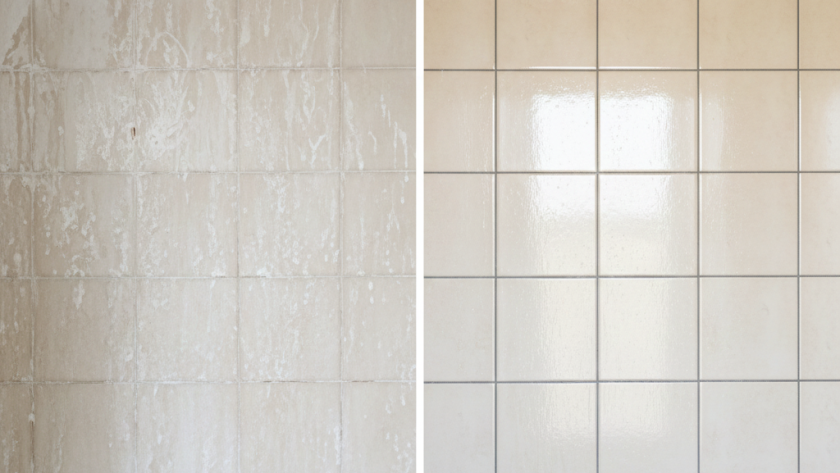
Hard water stains can make even a clean bathroom look dull and neglected, which is why they’re one of the most common shower maintenance frustrations. If you’re trying to remove hard water stains from shower walls without replacing tiles or relying on harsh chemicals, this guide fits directly into the broader strategies covered in The Complete Guide to Removing Hard Water Stains from Shower Surfaces. Here, you’ll find practical, proven methods that work on most shower wall materials and help you restore clarity and shine using tools you likely already have at home.
ve at home.
Why This Happens / Why This Matters
Hard water contains high levels of minerals like calcium and magnesium. When water evaporates on shower walls, these minerals are left behind, forming cloudy white stains or chalky buildup. Over time, layers of residue harden and become more difficult to remove.
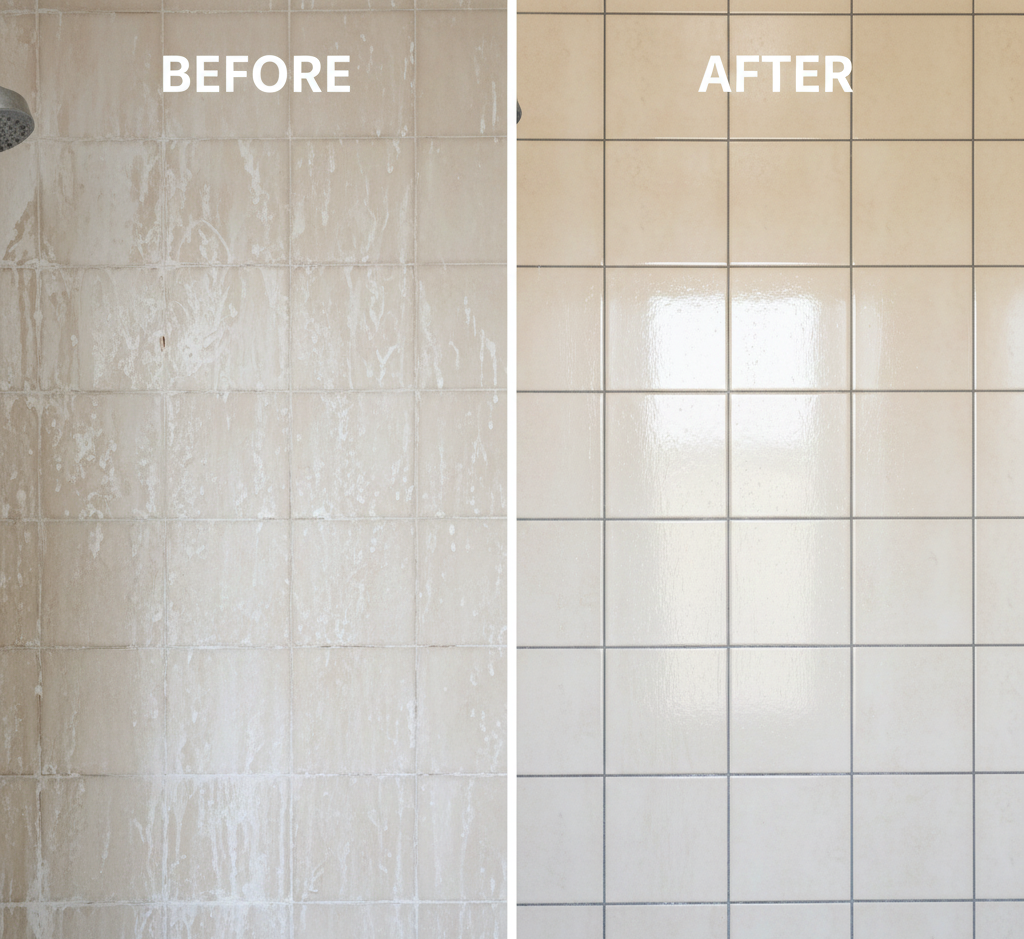
Beyond appearance, buildup can trap soap scum and grime, making regular cleaning less effective. If ignored, mineral deposits may even etch certain surfaces, especially glass or natural stone. Understanding why these stains form helps you choose methods that dissolve minerals instead of just scrubbing the surface.
Tools & Materials List
- White vinegar
- Baking soda
- Spray bottle
- Soft sponge or non-scratch scrub pad
- Microfiber cloth
- Old toothbrush (optional)
- Dish soap
- Warm water
Step-by-Step Instructions
- Prep the shower walls
Start by rinsing the shower walls with warm water. This removes loose dirt and softens surface residue, making mineral deposits easier to dissolve. Avoid drying the walls—slightly damp surfaces help cleaners spread evenly. - Apply vinegar solution
Fill a spray bottle with equal parts white vinegar and warm water. Spray generously over stained areas, making sure the surface is fully coated. Vinegar works by breaking down calcium and magnesium deposits. - Let it sit
Allow the solution to sit for 10–15 minutes. This dwell time is important, especially for older stains. For vertical walls, re-spray lightly if you notice the liquid running off too quickly. - Gently scrub
Use a soft sponge or non-scratch pad to scrub the area in circular motions. Focus on visibly cloudy spots rather than the entire wall. For corners or grout lines, an old toothbrush works well. - Rinse thoroughly
Rinse the walls with warm water to wash away loosened minerals and vinegar residue. Check the surface while wet—most stains will already look reduced or gone. - Repeat if needed
For stubborn areas, repeat the vinegar application and scrubbing once more. Multiple light passes are more effective and safer than aggressive scrubbing. - Dry and inspect
Wipe the walls dry with a microfiber cloth. Drying prevents new water spots and helps you clearly see if any stains remain.
Natural / Simple Alternatives
If vinegar alone isn’t enough, you can boost its effectiveness naturally. Mix baking soda with a small amount of water to form a paste. Apply it directly to stubborn stains after spraying vinegar, then gently scrub once it begins to fizz.
Another option is adding a few drops of dish soap to your vinegar solution. This helps the mixture cling to vertical surfaces and cut through soap residue mixed with mineral buildup. These methods stay simple while improving results on tougher deposits.
Troubleshooting
- Stains keep coming back quickly
This usually means hard water residue is building up faster than your cleaning routine. Increase cleaning frequency rather than using stronger products. - Cloudiness remains after cleaning
Some surfaces, especially glass, may have light etching rather than removable buildup. Regular maintenance can still improve appearance, but complete clarity may not be possible. - Scratches appear
Switch to a softer sponge or cloth immediately. Avoid abrasive pads, which can damage finishes and make future stains stick more easily.
Prevention / Simple Maintenance Tips
- Wipe shower walls with a squeegee or microfiber cloth after each use
- Spray a light vinegar-water mix weekly to dissolve early buildup
- Rinse walls thoroughly after using soap or shampoo
- Keep surfaces dry to reduce mineral deposits
Small habits make a big difference in keeping stains from forming again.
Closing
Learning how to remove hard water stains shower walls doesn’t require expensive products or harsh cleaners. With consistent care and the right techniques, you can keep your shower looking clean, clear, and well-maintained. A little routine maintenance goes a long way in preventing mineral buildup from taking over again.