Hard water stains can make even a clean bathroom look dull and neglected, especially when they build up on shower tiles over time. As part of The Complete Guide to Removing Hard Water Stains from Shower Surfaces, this focused guide shows you how to remove hard water stains from shower tiles using simple, effective methods that don’t rely on harsh chemicals or complicated tools. With the right approach and a bit of patience, you can restore the natural shine of your tiles and keep them looking clean and fresh for the long run.
Why This Happens / Why This Matters
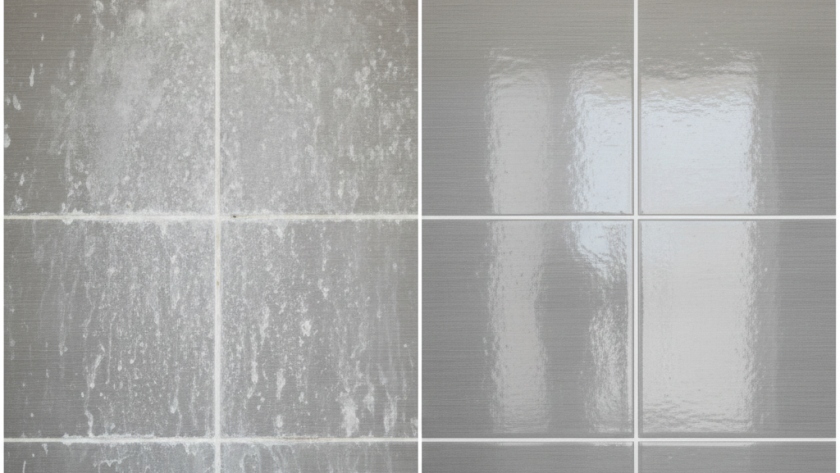
Hard water contains high levels of minerals, mainly calcium and magnesium. When water evaporates on shower tiles, these minerals are left behind as white, chalky, or cloudy stains. Over time, the buildup hardens and becomes more difficult to remove.

This matters because mineral deposits don’t just affect appearance. If left untreated, they can trap soap scum, encourage grime to stick, and make routine cleaning much harder. On some tile surfaces, long-term buildup can even dull the finish, making tiles look permanently worn.
Tools & Materials List
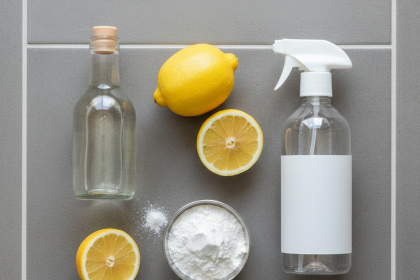
You likely already have most of these at home:
- White vinegar
- Baking soda
- Spray bottle
- Soft sponge or non-abrasive scrub pad
- Old toothbrush
- Microfiber cloth
- Warm water
- Dish soap (optional)
Step-by-Step Instructions
- Rinse the tiles first
Start by rinsing your shower tiles with warm water. This removes loose dirt and softens surface residue, making the mineral stains easier to tackle. - Apply vinegar to the stains
Fill a spray bottle with plain white vinegar. Spray it directly onto the stained areas, making sure they’re fully damp. Vinegar works well because it breaks down mineral deposits naturally. - Let it sit
Allow the vinegar to sit on the tiles for 10–15 minutes. For heavier buildup, you can wait a bit longer, but avoid letting it dry completely. - Gently scrub the surface
Use a soft sponge or non-abrasive scrub pad to work the vinegar into the stains. Scrub in small, circular motions. For grout lines or corners, switch to an old toothbrush for better control. - Boost with baking soda if needed
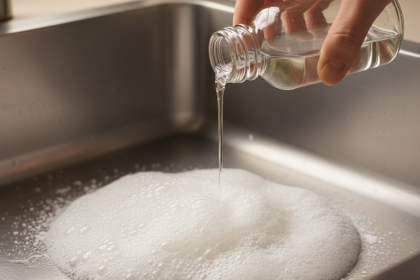
If stains are still visible, sprinkle a small amount of baking soda onto the damp tiles. It will react slightly with the vinegar, creating gentle fizzing that helps lift stubborn deposits. Scrub again lightly. - Rinse thoroughly
Rinse the area with warm water to wash away loosened minerals and residue. Make sure no baking soda is left behind, as it can leave a powdery film. - Dry and buff
Use a microfiber cloth to dry the tiles completely. This step is important—it prevents new mineral spots from forming and brings back the tile’s natural shine.
Natural / Simple Alternatives
If vinegar isn’t your preference, there are other simple options:
- Lemon juice works similarly to vinegar and leaves a fresh scent. Apply, let sit, scrub, and rinse.
- Dish soap + warm water can help with light stains, especially when mineral buildup mixes with soap scum.
- Baking soda paste (baking soda mixed with a little water) is useful for spot treatment on stubborn areas.
These alternatives are best for mild to moderate stains and regular upkeep.
Troubleshooting
- Stains won’t budge: The buildup may be layered. Repeat the process rather than scrubbing harder. Patience works better than force.
- Tiles look cloudy after cleaning: Residue may still be present. Rinse again and dry thoroughly with a clean cloth.
- Grout still looks dark: Focus cleaning on grout separately using a toothbrush and baking soda paste for more targeted action.
- Streaks keep appearing: This often happens when tiles air-dry. Always finish by wiping them dry.
Prevention / Simple Maintenance Tips
- Wipe down shower tiles with a microfiber cloth after each use.
- Use a squeegee to remove excess water quickly.
- Clean lightly once a week to prevent mineral buildup from hardening.
- Keep tiles dry whenever possible—standing water is the main cause of stains.
Closing
Learning how to remove hard water stains shower tiles doesn’t require special products or heavy scrubbing. With simple household ingredients and a consistent routine, you can keep your shower tiles clean, bright, and easier to maintain over time.