Removing hard water stains bathroom floor issues can be frustrating, especially when the floor still looks dull after regular mopping, but understanding that these chalky marks come from mineral buildup—not dirt—makes them much easier to tackle. As part of The Complete Guide to Removing Hard Water Stains from Shower Surfaces, this guide shows how the same proven principles used on shower walls and tiles can be applied to common bathroom floor materials, using simple tools and household solutions to lift stains safely, restore clarity, and prevent mineral residue from building up again.
Why This Happens / Why This Matters
Hard water contains high levels of minerals like calcium and magnesium. When water splashes onto your bathroom floor and dries, those minerals are left behind, slowly forming visible stains. Over time, this buildup becomes harder and more noticeable, especially around showers, toilets, and sinks.
Beyond appearance, mineral residue can make floors feel rough or slippery and may dull the surface finish. If ignored, stains can bond more tightly to tile or stone, making future cleaning more difficult. Addressing the problem early helps protect your floor’s surface and keeps routine cleaning easier.
Tools & Materials List
- White vinegar
- Baking soda
- Warm water
- Spray bottle
- Soft-bristle brush or old toothbrush
- Microfiber cloth or mop
- Plastic scraper or old credit card
- Bucket
Step-by-Step Instructions
- Sweep or dry-mop the floor first
Start by removing dust, hair, and loose debris. This prevents grit from scratching the surface while you scrub and helps cleaning solutions work directly on the mineral stains. - Prepare a vinegar cleaning solution
Fill a spray bottle with equal parts white vinegar and warm water. Vinegar’s natural acidity helps dissolve mineral deposits without harsh chemicals. - Apply the solution to stained areas
Spray generously over the hard water marks on the bathroom floor. Make sure the area is fully damp but not flooded. - Let it sit for 5–10 minutes
This dwell time allows the vinegar to break down mineral buildup. Avoid letting it dry completely, as that reduces effectiveness. - Gently scrub the surface
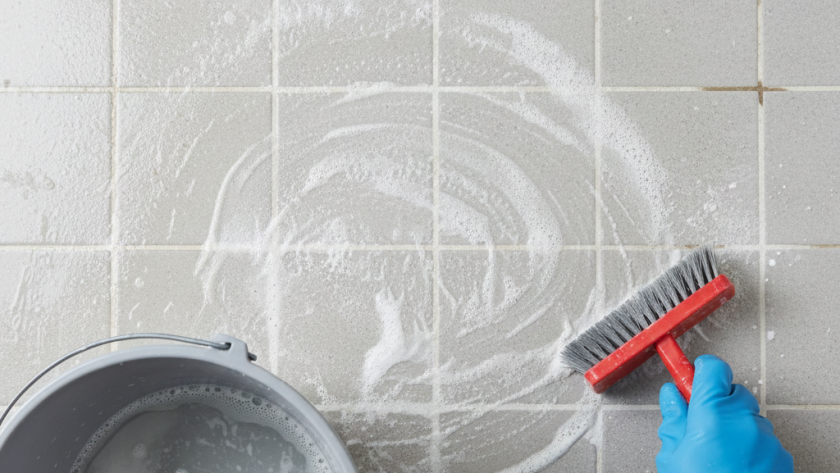
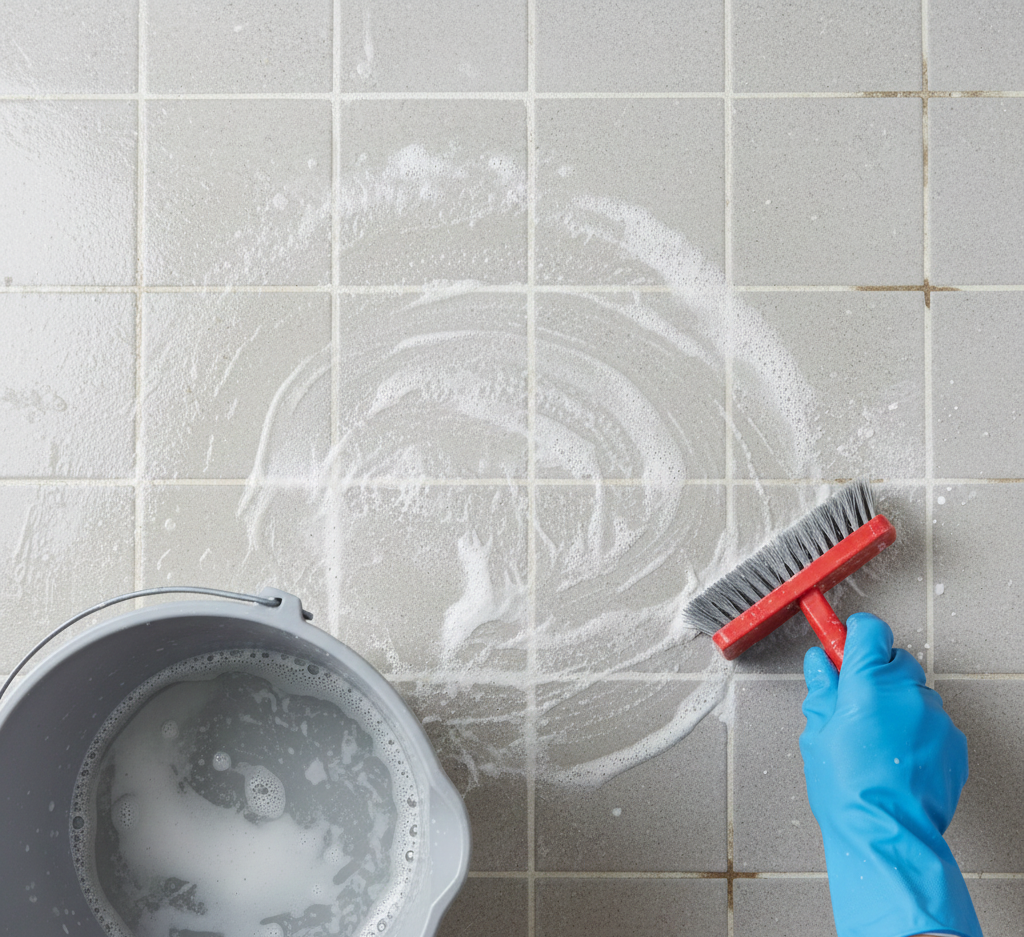
Use a soft-bristle brush or toothbrush to scrub in small circular motions. Focus on grout lines and textured tiles where buildup tends to cling. - Use baking soda for stubborn spots
For heavier stains, sprinkle a small amount of baking soda directly onto the damp area. Scrub again gently—the mild abrasiveness boosts cleaning power without damaging the floor. - Lift residue carefully if needed
If chalky deposits remain, use a plastic scraper or old credit card at a shallow angle to lift residue. Never use metal tools, which can scratch tiles. - Rinse thoroughly with clean water
Mop or wipe the area with clean water to remove any leftover vinegar or baking soda. Residue left behind can attract new mineral buildup. - Dry the floor completely
Use a microfiber cloth or dry mop to remove moisture. Drying is key to preventing new stains from forming right away.
Natural / Simple Alternatives
If vinegar isn’t your preference, lemon juice is another effective natural option. Its citric acid works similarly against mineral deposits and leaves a fresh scent. Apply it directly to stains, let it sit briefly, then scrub and rinse.
Another option is a paste made from baking soda and water. Spread it over stains, allow it to sit for 10–15 minutes, then scrub gently. These alternatives work best on light to moderate buildup and are ideal for routine maintenance.
Troubleshooting
- Stains won’t budge: The buildup may be layered. Repeat the process once more rather than scrubbing harder.
- Grout still looks dull: Focus extra time on grout lines using a toothbrush and baking soda paste.
- Floor looks cloudy after cleaning: This usually means residue wasn’t fully rinsed away. Mop again with clean water and dry thoroughly.
- Surface feels rough: Mineral deposits may still be present—spot-treat those areas again instead of redoing the entire floor.
Prevention / Simple Maintenance Tips
- Dry the bathroom floor after showers, especially near wet zones.
- Mop weekly with warm water to prevent minerals from settling.
- Address splashes and puddles promptly instead of letting them air-dry.
- Use a vinegar-water wipe-down once every one to two weeks for maintenance.
Closing
Learning how to remove hard water stains bathroom floor surfaces doesn’t require harsh products or heavy scrubbing. With simple tools and consistent care, you can restore a clean, smooth look and keep mineral buildup from taking over again. A little routine attention goes a long way in keeping your bathroom floor looking fresh.