Overview
Learning how to clean sink with baking soda and vinegar is one of the simplest ways to keep your kitchen or bathroom fresh without relying on harsh cleaners, and it’s a core technique covered in The Complete Guide To Cleaning Kitchen Sink With Baking Soda. This natural method uses ingredients you likely already have at home and works well for everyday grime, light stains, and unpleasant odors. With the right steps and a consistent routine, you can restore your sink’s shine and keep it looking clean and well-maintained over time.
Why This Happens / Why This Matters
Sinks collect residue every day from food particles, grease, soap, toothpaste, and mineral deposits from water. Over time, these build up and create dull surfaces, stubborn stains, or lingering smells. If left untreated, grime can harden and become harder to remove.
Cleaning regularly matters because a sink is one of the most frequently used fixtures in your home. A clean sink not only looks better, but also makes daily tasks more pleasant. Using baking soda and vinegar helps break down buildup gently, making it a practical option for routine cleaning without complicated tools or chemicals.
Tools & Materials List
- Baking soda
- White vinegar
- Warm water
- Soft sponge or cloth
- Old toothbrush (optional, for corners)
- Paper towels or a clean towel
Step-by-Step Instructions
- Clear and rinse the sink
Remove dishes, drain strainers, and any debris. Rinse the sink with warm water to wash away loose dirt and prepare the surface for cleaning. - Sprinkle baking soda evenly
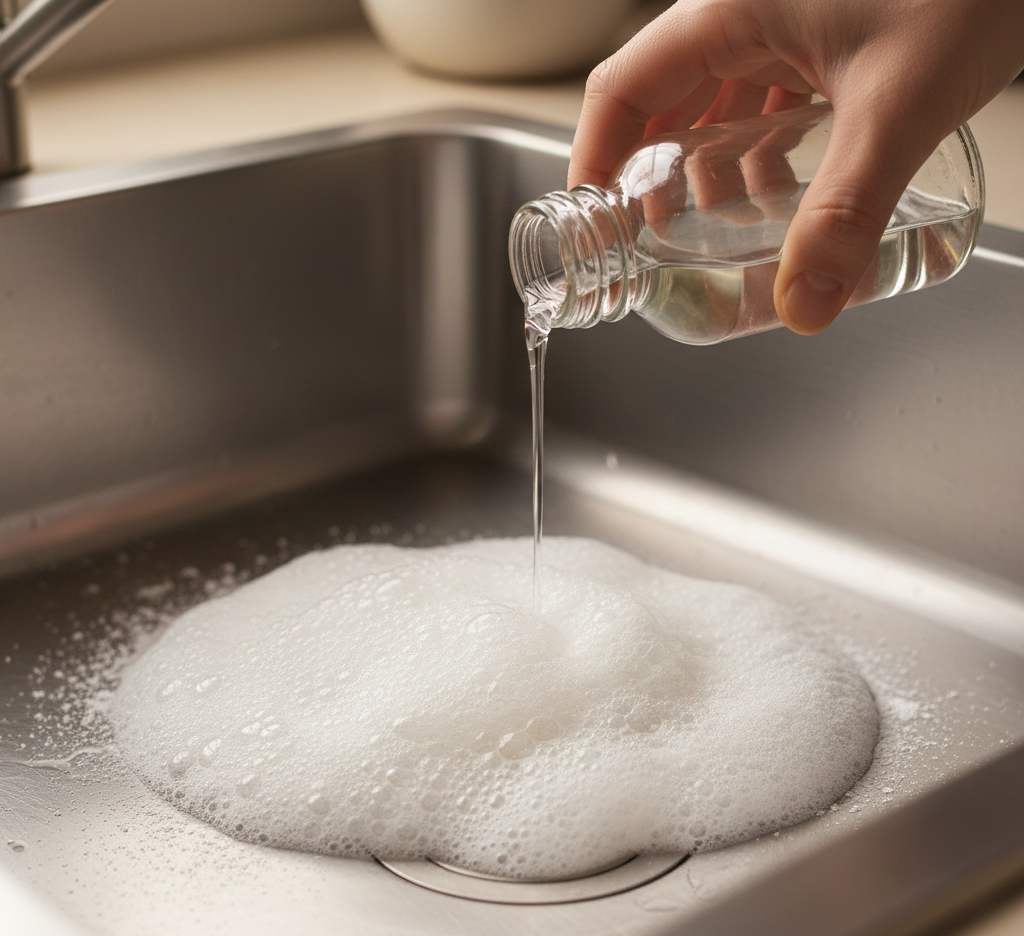
Shake baking soda across the sink surface, focusing on stained or dull areas. Baking soda acts as a mild abrasive, helping lift grime without scratching most sink materials. - Add vinegar to activate the reaction
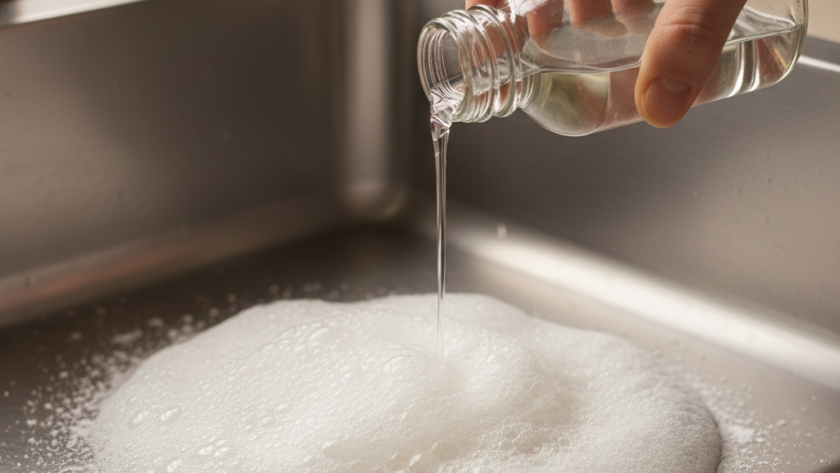
Slowly pour or spray white vinegar over the baking soda. You’ll notice a gentle fizzing reaction. This helps loosen grease, residue, and odors trapped on the surface. - Let it sit briefly
Allow the mixture to sit for about 5–10 minutes. This short wait gives the natural reaction time to break down buildup without drying out. - Scrub gently
Using a damp sponge or cloth, scrub the sink in circular motions. Pay extra attention to corners, edges, and around the drain. For tight spots, an old toothbrush works well. - Rinse thoroughly
Rinse the entire sink with warm water to remove all residue. Make sure no baking soda remains, especially near the drain. - Dry and buff
Wipe the sink dry with a clean towel or paper towel. This step helps prevent water spots and leaves the surface looking brighter.
Natural / Simple Alternatives
If you don’t have vinegar on hand, baking soda can still be effective on its own when mixed with a little water to form a paste. Another option is lemon juice, which adds natural freshness and helps cut through light grease. Simply sprinkle baking soda, add lemon juice, scrub, and rinse.
For quick daily touch-ups, warm water and a soft cloth can handle light residue before it builds up. These simple alternatives keep cleaning flexible and easy.
Troubleshooting
- Stains won’t lift: Repeat the process and let the baking soda and vinegar sit a bit longer before scrubbing.
- Cloudy finish: Make sure all residue is fully rinsed, then dry the sink to prevent streaks.
- Odors remain: Pour a small amount of baking soda followed by vinegar directly into the drain, then rinse with warm water.
- Sensitive surfaces: Use a softer cloth and lighter pressure to avoid dulling delicate finishes.
Prevention / Simple Maintenance Tips
- Rinse the sink after heavy use to remove residue immediately.
- Wipe it dry to reduce water spots and mineral buildup.
- Use baking soda weekly as a light scrub to maintain shine.
- Avoid letting food scraps or soap scum sit overnight.
Closing
Now you know how to clean sink with baking soda and vinegar using a method that’s simple, affordable, and easy to repeat. With regular care and a few minutes of attention, your sink can stay fresh, clean, and ready for everyday use without extra effort.