
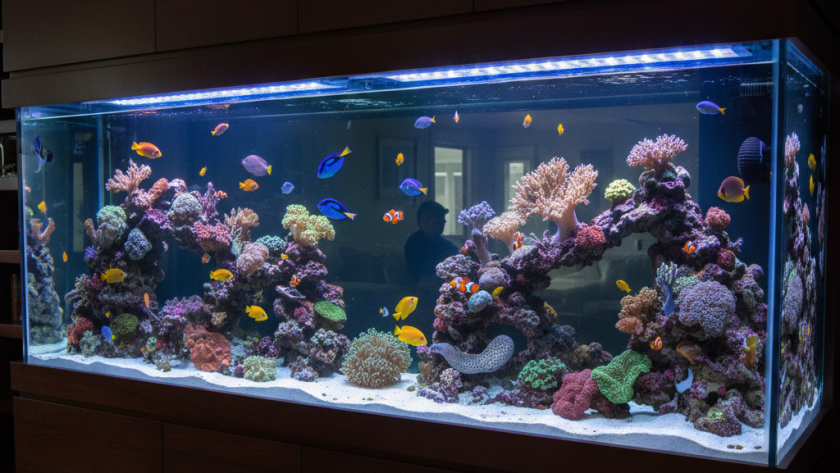
Keeping your aquarium view clear can feel impossible when green patches start taking over the glass, but once you understand what causes fish tank glass algae, cleaning it safely becomes much easier. If the buildup keeps returning, don’t worry—this guide shows you the right tools, the exact steps, and the simple routines that work consistently, all aligned with the principles covered in The Complete Guide to Cleaning and Maintaining Aquarium Glass so you can keep your tank looking bright and healthy.
Why Algae Appears on Aquarium Glass
Algae grows naturally in any environment that mixes light, nutrients, and water. When those three conditions line up too strongly—such as too much sunlight, leftover fish food, or high nitrate levels—algae spreads across the glass.
This matters because thick algae blocks your view, reduces light penetration for plants, and makes tanks look poorly maintained. While algae itself isn’t dangerous, letting it build up often signals that the tank cycle, lighting schedule, or cleaning routine needs small tweaks. The good news? It’s one of the easiest aquarium problems to fix.
Tools & Materials
- Magnetic glass cleaner or algae scraper
- Soft sponge or microfiber cloth
- Razor blade (for glass tanks only)
- Bucket of old tank water
- Small brush (optional)
- Aquarium-safe cleaning pad
- Clean towel for wiping the outside
Step-by-Step Instructions
- Turn off all equipment.
Switch off the filter, heater, and air pump. This gives you a still tank, making it easier to see the algae patches clearly. - Start with a magnetic cleaner or scraper.
Move it slowly across the surface. Begin with long vertical or horizontal strokes. Avoid fast zigzag motions that might stir debris into the water. - Use a razor blade for stubborn spots (glass only).
Hold the blade at a shallow angle and gently push forward. This works especially well on hard green spot algae. Never use a blade on acrylic—use an acrylic-safe scraper instead. - Clean corners and edges.
Use a small brush or sponge to reach spots the scraper can’t. Work gently to avoid scratching silicone seams. - Wipe the outside glass.
Dip a soft cloth in your bucket of old tank water. Wipe the outside surface to remove fingerprints, dried splashes, or smudges without using chemicals. - Perform a small water change (optional but recommended).
After scraping, some algae particles float freely. Removing 20–30% of the water helps clear them out and improves visibility. - Restart all equipment.
Turn everything back on and let the filter run for a few minutes. You’ll see the tank clear up quickly as debris gets caught in the filter. - Observe the glass over the next 24 hours.
A little haze is normal right after cleaning. It should settle once the filter catches loosened algae particles.
Natural / Simple Alternatives
If you prefer gentler or low-effort methods, try these easy options:
- Use apple snails or nerite snails (if your tank setup allows). They naturally graze on soft algae films.
- Reduce room sunlight exposure. Closing curtains or adjusting tank placement can slow algae buildup dramatically.
- Shorten the lighting schedule. Tanks without live plants often only need 6–8 hours of light daily.
- Feed slightly less. Excess fish food breaks down into nutrients algae love. Small changes reduce algae growth fast.
These methods aren’t instant, but they help maintain a cleaner tank over time.
Troubleshooting
Still seeing patches after cleaning? One of these might be the cause:
- Hard green dot algae that won’t scrape off.
Use a fresh razor blade on glass tanks. Old blades lose their edge and make the job harder. - Algae returning quickly every 2–3 days.
Check lighting duration or accidental direct sun exposure. - Cloudy smears after scraping.
This usually means leftover biofilm. Wipe with a microfiber cloth soaked in old tank water. - Scratches on the glass.
Sand or gravel may have gotten between the scraper and the glass. Clean both tools and glass before continuing.
Prevention / Simple Maintenance Tips
A clean aquarium is more about consistency than effort. Try these small habits:
- Wipe the glass lightly once a week.
- Keep lights on a timer to avoid accidental long hours.
- Do regular partial water changes.
- Avoid placing the tank near bright windows.
- Clean the filter monthly to keep water movement strong.
These tiny routines greatly reduce the chance of algae taking over again.
Closing
With the right tools and a simple routine, removing fish tank glass algae becomes quick and stress-free. Clear glass not only improves your view—it helps your whole aquarium look brighter and more enjoyable every day.
