
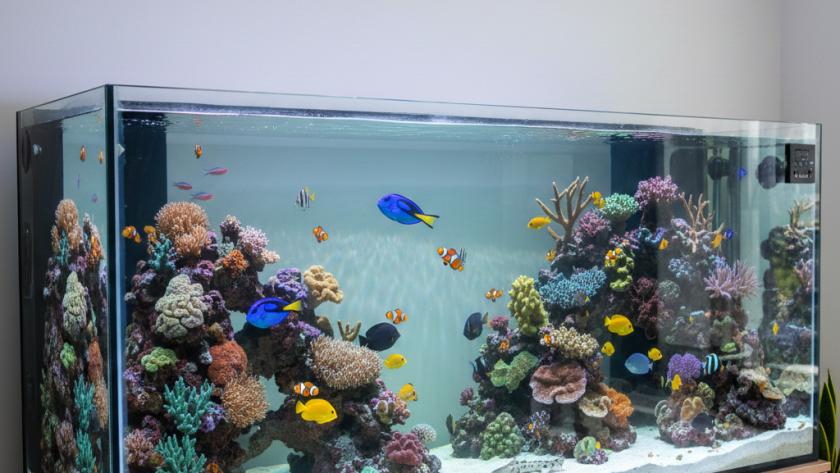
Keeping your tank clear takes a gentle touch, and knowing how to clean aquarium glass without scratching makes all the difference. Scratches are permanent, so the goal is to remove buildup safely while protecting the surface. This guide explains why residue forms, the safest tools to use, and an easy step-by-step method to get your aquarium looking spotless again, naturally complementing the broader care principles outlined in The Complete Guide to Cleaning and Maintaining Aquarium Glass.
Why Residue Builds Up and Why It Matters
Aquarium glass picks up different kinds of debris over time. Hard water leaves mineral spots, fish waste contributes to cloudy films, and algae grows wherever light reaches. If these layers harden, they become tougher to remove and more tempting to scrape aggressively.
The problem is that many everyday tools—like rough pads, metal blades, or kitchen sponges—contain abrasive fibers that can easily mark the glass or acrylic. Even fine scratches catch light and debris, making the tank look foggy no matter how often you wipe it. Understanding the cause of the buildup helps you choose the right method and avoid damaging your tank long-term.
Tools & Materials You’ll Need
- Soft microfiber cloths
- Aquarium-safe algae scraper (plastic for acrylic, stainless for glass)
- Melamine sponge (magic eraser type, aquarium-safe)
- Vinegar solution (1:1 water and white vinegar)
- Bucket or spray bottle
- Magnetic glass cleaner (optional)
- Old credit card (as a gentle scraper alternative)
Step-by-Step Instructions
1. Start by Turning Off Lights
Bright lights encourage algae growth and make residue tougher to see clearly. Turning them off helps you spot dirty areas without glare.
2. Clean the Inside Glass First
Use an aquarium-safe scraper suited to your tank material.
- Begin at the top and move downward in slow, even strokes.
- Avoid digging into tough patches—multiple passes work better than one hard press.
- For acrylic tanks, stick strictly to plastic scrapers.
3. Use a Melamine Sponge for Stubborn Films
Wet the sponge with tank water. Lightly buff cloudy areas using gentle circular motions. Melamine works like ultra-fine sandpaper, so use minimal pressure to avoid micro-abrasions.
4. Remove Algae in Corners
Fold a microfiber cloth or use the edge of an old credit card. Work slowly to avoid slipping and dragging grit along the surface.
5. Clean the Outside Glass
Spray a vinegar-and-water mix onto a cloth—not directly on the tank—to avoid drips entering the water.
Wipe in straight lines for a streak-free finish. Dry with a fresh microfiber cloth.
6. Inspect Under Different Angles
Move your head side to side and check under room lighting. This helps reveal thin residue you may have missed. Repeat the step only where needed.
7. Finish With a Magnetic Cleaner (Optional)
Run it around the tank edges daily to reduce buildup between deep cleans. Make sure no sand gets trapped between the pads.
Natural or Simple Alternatives
You don’t need specialized chemicals to get clear glass. A vinegar solution softens mineral stains and is safe to use externally. For inside surfaces, clean tank water plus a microfiber cloth can remove most algae without any product at all. If you want a completely chemical-free approach, a magnetic cleaner and simple plastic scraper are often enough, especially if used regularly. These options are gentle, accessible, and beginner-friendly.
Troubleshooting
White crust won’t come off:
Soak a microfiber cloth in warm vinegar and press it against the outside glass for 2–3 minutes before wiping.
Inside algae keeps returning quickly:
Your lighting may be running too long or too bright. Reduce duration slightly and observe changes.
Fine scratches already visible:
Switch to only microfiber and plastic scrapers going forward. Scratches can’t be removed easily, but you can prevent new ones and keep residue from settling into old marks.
Cloudy streaks after cleaning:
Use two cloths—one for wet cleaning, one for drying. Hard water often leaves streaks unless dried immediately.
Prevention and Simple Maintenance Tips
Clean the inside walls lightly every few days using a magnetic scraper. Wipe the outside glass weekly with a vinegar cloth to stop minerals from hardening. Avoid wiping the tank when sand or gravel is stirred up, since tiny grains can cause scratches. Consistent, gentle maintenance is far more effective than occasional deep scrubbing.
Closing
With the right tools and a patient approach, it’s easy to clean aquarium glass without scratching and keep your tank bright and clear. Gentle, consistent care gives the best results—and keeps your aquarium looking great at every angle.
